

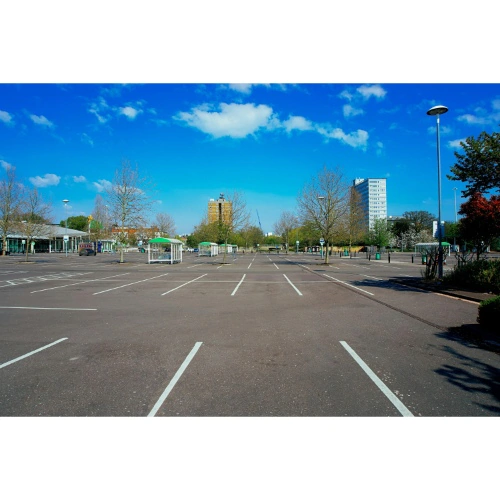
Northwich’s retail parks and supermarkets are designed for constant public use. Large volumes of customers move through aisles, entrances, car parks, and shared walkways every day. That level of activity creates a predictable risk: hazards can appear quickly, and if they are not managed properly, accidents follow.
When an incident happens in one of these environments, the key issue is not simply the accident itself. It is whether the space was being managed in a way that kept it reasonably safe for the public.
Marley Solicitors advises on retail accident claims where the central question is whether the business or site operator failed to deal with a hazard in time.
How accidents typically occur in supermarkets and retail parks
Retail environments create a mix of immediate and developing risks.
Inside supermarkets, hazards often arise from spills, dropped products, or recently cleaned floors. In retail parks, risks extend beyond the shop floor to shared walkways, car parks, and access points where maintenance may be less consistent.
These environments rely on continuous monitoring. Staff are expected to identify hazards and deal with them quickly. Where that process breaks down, accidents become more likely.
Retail scenario matrix: How different situations affect responsibility
Retail accident claims often depend on how the hazard developed and how it was handled. The same type of injury can lead to different outcomes depending on the circumstances.
Spill in a supermarket aisle
If a spill is present and not addressed within a reasonable timeframe, responsibility may arise. The expectation is that staff are actively monitoring the area and responding quickly to hazards.
Recently cleaned floor with no warning sign
A wet floor is not automatically unsafe, but it must be clearly marked. If no warning is in place, the risk is not properly managed, which strengthens the basis of a claim.
Obstacle left in a walkway
Stock, packaging, or equipment left in customer areas can create a trip hazard. Responsibility depends on whether the obstruction should have been removed or clearly identified.
Uneven surface in a retail park walkway
In shared outdoor areas, the responsibility may sit with a site operator rather than an individual retailer. The key issue is whether maintenance systems were in place and whether defects were addressed.
Car park hazards such as potholes or poor lighting
These situations often involve longer-term maintenance issues. Responsibility depends on whether the defect existed long enough to be identified and repaired.
This range of scenarios shows that retail accident claims are not judged by the injury alone, but by how the environment was managed.
What determines whether you can claim
A claim is more likely to succeed where a hazard existed and was not dealt with in a way that met reasonable safety standards.
In retail environments, this usually involves looking at:
- how long the hazard was present
- whether staff were monitoring the area
- whether action was taken within a reasonable timeframe
- whether the risk was clearly identified, for example, through warning signs
The presence of a hazard is only part of the picture. The response to that hazard is what determines responsibility.
Scenario example: Slip in a Northwich supermarket
A customer enters a supermarket during a busy period. A liquid spill is present in an aisle where staff are restocking shelves.
There is no warning sign, and no attempt has been made to clear the spill. The customer slips and is injured.
If it can be shown that the spill existed for a sufficient period and no action was taken, responsibility becomes easier to establish. If the spill occurred moments before the accident and staff had no reasonable opportunity to respond, the position becomes less certain.
The outcome depends on timing, awareness, and response rather than the presence of the spill alone.
Where responsibility can be shared
Retail parks often involve multiple parties.
A supermarket may control its internal environment, while a site management company may be responsible for shared areas such as walkways and car parks. Contractors may also be involved in cleaning or maintenance.
In Northwich cases, Marley Solicitors often examines how responsibility is divided between these parties. Identifying who controlled the area where the accident occurred is essential to building a claim.
Evidence that supports a retail accident claim
Retail claims often rely on evidence that shows how the environment was managed at the time of the incident.
Useful evidence includes:
- CCTV footage from inside the store or surrounding areas
- incident reports recorded by staff
- witness accounts from other customers
- maintenance or cleaning records
- photographs of the hazard taken at the time
This evidence helps establish whether the hazard was present long enough to be identified and whether appropriate action was taken.
How Marley Solicitors approaches retail accident claims
Retail environments require a focus on timing and process. The key is to show not just that a hazard existed, but that it should have been dealt with before the accident occurred.
Marley Solicitors works by examining how the site was being managed, identifying where response systems failed, and linking that failure directly to the incident.
By building the claim around what should have happened rather than what did happen, the position becomes clearer.
Understanding your position after a retail accident
If there is clear evidence of improper hazard management, an accident in a Northwich supermarket or retail park may bolster a claim. If there is clear evidence of improper hazard management, an accident in a Northwich supermarket or retail park may bolster a claim.
Where the environment was monitored and action was taken within a reasonable timeframe, the position becomes more difficult.
The strength of a claim depends on whether the risk could and should have been addressed before the accident occurred.