

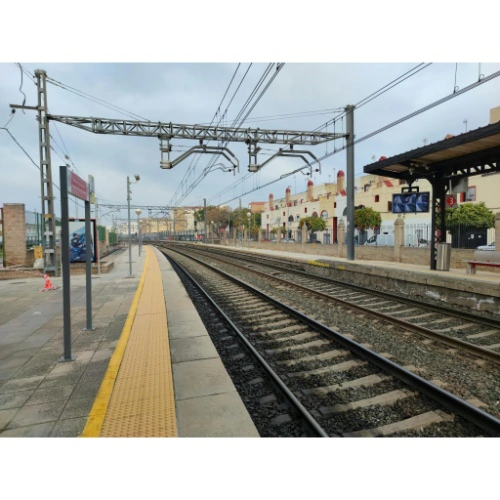
Crewe has long been associated with railway engineering, rail depots, and industrial operations that support transport and manufacturing. These environments are structured, fast-moving, and often heavily regulated, which creates a different type of risk compared to typical workplace settings, such as the potential for equipment failure, human error, or regulatory non-compliance that can lead to serious accidents.
When an accident happens in this context, the question is rarely simple. It is not just about whether an injury occurred but also how the sequence of events unfolded and where responsibility sits within that sequence.
Marley Solicitors handles claims involving railway and industrial environments where establishing responsibility requires a clear reconstruction of what happened before, during, and after the incident.
How these accidents typically begin
Railway and industrial accidents often start with a breakdown in process rather than a single obvious hazard.
In rail environments, this might involve access to restricted areas, coordination between teams, or the movement of equipment and vehicles within controlled zones. In industrial settings, it can involve machinery, manual handling, or tasks carried out under time pressure.
The common thread is not the type of accident, but the presence of a gap in how safety procedures are applied in practice.
What happens immediately after the incident?
In Crewe-based railway and industrial settings, incidents are usually recorded quickly. Reporting systems are often strict, particularly in rail environments where compliance requirements are high.
An incident will typically be logged, supervisors notified, and internal processes triggered. Medical attention may follow, depending on the severity of the injury.
This stage is more important than it appears. The accuracy and timing of what is recorded immediately after the incident often shapes how the situation is interpreted later.
How responsibility is assessed
Responsibility in these environments usually involves multiple parties.
An employer may be responsible for training and safe systems of work. A site operator may control the environment. A contractor or third party may influence how a task is carried out.
Because of this, claims are built by examining the sequence of events rather than relying on assumptions.
In Crewe-based cases, Marley Solicitors often reconstructs that sequence to identify where safety processes failed or were not followed correctly.
Timeline example: rail depot incident in Crewe
A worker begins a shift at a rail depot and is assigned to assist with maintenance near active equipment.
The task briefing is limited, and the worker is not clearly informed of movement schedules within the area.
As work begins, equipment is moved through the zone without adequate warning or coordination.
The worker attempts to reposition quickly, loses footing, and sustains an injury.
The incident is reported, and internal documentation is created. An investigation follows, reviewing training records, communication procedures, and site controls.
The strength of any claim depends on what that sequence shows. If the process broke down at any stage, responsibility may be established. If procedures were followed correctly, the position becomes more complex.
What evidence matters in these claims?
In railway and industrial cases, evidence is closely tied to process and compliance.
Records that tend to carry the most weight include incident logs, safety documentation, training records, and any monitoring systems in place at the site. These help establish not just what happened, but whether the correct procedures were in place and followed.
The timing of this evidence is critical. Once investigations begin, environments change and records are reviewed, which can make early documentation more valuable.
Where claims become difficult
Not every accident in a rail or industrial setting leads to a successful claim.
These environments often have established safety systems and detailed procedures. Where those systems are followed correctly, proving fault becomes more difficult.
Claims also become more complex where responsibility is shared or where documentation does not clearly show a failure.
This is why the sequence of events must be clear. Without that clarity, it becomes harder to demonstrate that the incident was avoidable.
How Marley Solicitors approaches railway and industrial claims
Claims in these environments require a structured approach that focuses on process rather than assumption.
Marley Solicitors works by reconstructing the timeline of events, identifying where procedures should have prevented the incident, and determining which party was responsible at each stage.
This makes it possible for the claim to be based on a clear chain of cause and effect instead of vague descriptions of what happened.
Understanding whether a claim is possible
Whether a claim can proceed depends on what the sequence of events reveals.
If the timeline shows a gap in safety procedures, communication, or control of the environment, there may be a basis for compensation.
If the evidence shows that processes were followed correctly, the position becomes more limited.
In railway and industrial cases, clarity of sequence is what determines the outcome.