

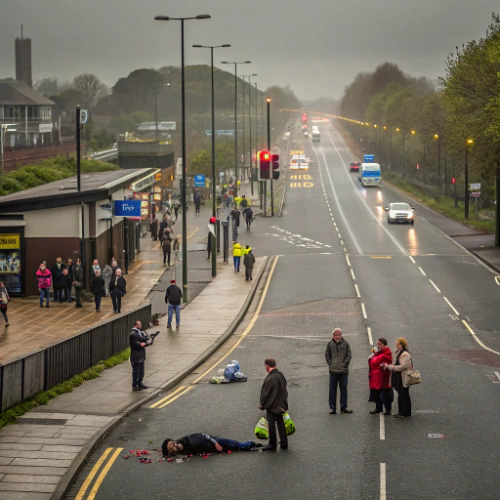
It can be particularly unsettling to sustain injuries as a pedestrian. Unlike drivers, pedestrians have no physical protection, and even low-speed collisions can result in serious injury. In Runcorn, pedestrian accidents often occur near junctions, crossings, car parks, and busy urban routes where foot traffic and vehicles interact closely.
After the immediate shock has passed, many pedestrians are left uncertain about whether compensation is possible and how responsibility is assessed. Understanding how pedestrian accident claims work can help you decide whether exploring a claim is worthwhile.
Why pedestrian claims are treated differently
Pedestrians are classed as vulnerable road users. Because of this, drivers are expected to take a high level of care, particularly in built-up areas and places where pedestrians are likely to be present.
This fact does not mean that every pedestrian claim succeeds automatically, but it does influence how responsibility is assessed. Claims often focus on whether the driver took reasonable steps to avoid the collision and whether the risk to pedestrians was foreseeable.
Common causes of pedestrian accidents
In Runcorn, many pedestrian accidents are caused by everyday driving errors rather than deliberate recklessness. Drivers may fail to notice someone stepping out, misjudge speed when turning, or become distracted near crossings or junctions.
Poor visibility, parked vehicles blocking sight lines, unfamiliar road layouts, and busy traffic conditions can all increase risk. Understanding how the accident occurred is central to assessing whether a claim may succeed.
Who may be responsible for a pedestrian accident?
In most cases, responsibility lies with the driver of the vehicle. Drivers are expected to anticipate pedestrians, particularly near crossings, junctions, residential areas, and places with high footfall.
However, determining responsibility is not always straightforward. We may consider a pedestrian’s unexpected crossing, disregard for signals, or sudden entry into the road. In such cases, compensation may still be available but reduced to reflect shared responsibility.
Each claim turns on evidence rather than assumptions.
Injuries commonly suffered by pedestrians
Pedestrian injuries vary depending on speed, point of impact, and road conditions. Fractures to legs, arms, wrists, or ribs are common, as are soft tissue injuries affecting the back, neck, and shoulders.
Head injuries are a particular concern, even where there is no immediate loss of consciousness. Some injuries worsen over time or interfere with work and mobility longer than expected, which is why medical assessment is important even if symptoms seem mild initially.
How pedestrian compensation claims are handled
Pedestrian accident claims are usually made against the driver’s motor insurance. The process involves establishing how the collision occurred, assessing liability, and obtaining medical evidence to understand the injury and its impact.
Compensation may reflect pain and suffering as well as financial losses such as lost earnings, treatment costs, and travel expenses. In more serious cases, future losses or ongoing support may also be considered.
Many pedestrian claims are resolved through negotiation without court proceedings.
Evidence that often matters most
Evidence plays a central role in pedestrian accident claims. Police reports, witness statements, CCTV footage, and photographs of the scene can all help establish how the accident occurred.
Medical records link injuries to the collision and show how symptoms develop over time. Particularly in cases of disputed responsibility, early documentation can significantly impact the outcome.
Time limits and delayed symptoms
Pedestrian accident claims are subject to time limits, usually three years from the date of the collision. Where symptoms develop later, early medical records help demonstrate the connection between the injury and the accident.
Delays can make claims harder, particularly if evidence is lost or witness memories fade.
How can Marley Solicitors assist you?
Marley Solicitors advises clients in Runcorn and across Cheshire who have been injured as pedestrians. We can assess liability, explain how pedestrian compensation claims work, and guide you through your options clearly and realistically.
Our focus is on evidence, practicality, and helping you decide whether pursuing a claim makes sense.
Understanding your options as a pedestrian
If you were injured as a pedestrian in Runcorn and are unsure whether compensation may be available, understanding how claims are assessed can bring clarity. Many people delay action simply because responsibility feels uncertain.
Clear advice early on can help you make an informed decision and avoid unnecessary uncertainty.